

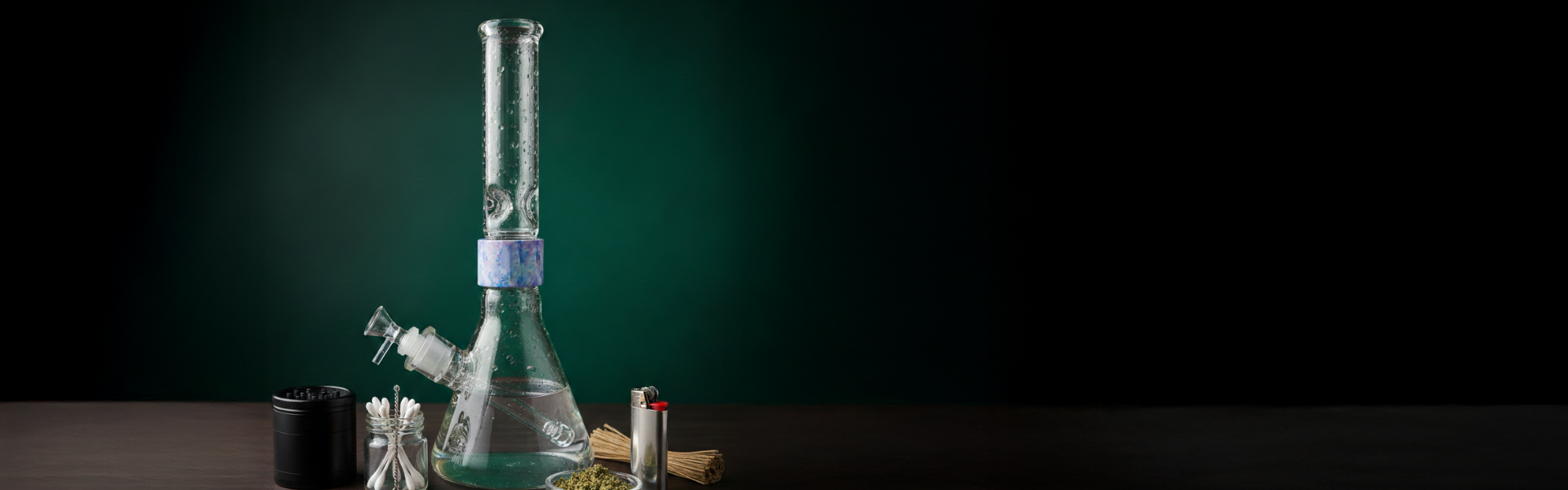
In a hurry? The ideal bong starter kit is an expertly curated system featuring a Borosilicate Glass Beaker Bong for maximum stability and a 4-piece aluminum grinder for optimal airflow. Avoid randomized "mystery boxes" and prioritize kits with standard 14mm joints and essential cleaning supplies (isopropyl alcohol and salt) to ensure hygiene and future compatibility.
Buying your first water pipe feels intimidating. You face thousands of options, confusing joint sizes (10mm? 14mm? 18mm?), and the constant fear of ordering something that arrives broken or doesn't fit your needs. It’s not just about buying a glass tube; it’s about building a reliable setup that won't tip over on your coffee table.
At Grasscity, we have shipped over one million bongs since 2000. We know exactly which glass survives shipping, which bases stay upright, and which accessories actually improve your session.
This guide skips the "mystery box" gambling found on other sites. Beginners need certainty, not randomization. We break down the physics of the perfect starter kit from the thermal shock resistance of borosilicate glass to the filtration volume of beaker bases. You don't need luck to get a great first session; you just need the right system.
Why a "Starter Kit" Beats Buying Piecemeal

Buying a bong piece-by-piece often leads to “compatibility stress” the sinking feeling when your new $40 ash catcher arrives with an 18mm male joint that doesn't fit your bong's 14mm female downstem. A bong starter kit eliminates this risk by providing a scientifically curated system where every component is pre-matched for airflow, size, and function.
Beginners need certainty, not gambling. While "mystery boxes" flood the market with promises of value, they rely on randomization that rarely serves a novice's specific needs. You might receive a soft glass piece that cracks under heat or a novelty pipe that is impossible to clean. Grasscity’s kits are the "Anti-Mystery Box" we list every specification, from glass thickness (typically 5-7mm) to joint size (standard 14.5mm), so you know exactly what you are investing in.
The table below contrasts the security of a curated kit against the risks of a mystery bundle:
Comparison: Curated Starter Kit vs. Mystery Box
| Feature | Curated Starter Kit | Mystery Box |
| Component Selection | Pre-matched for compatibility (Guaranteed Fit) | Random assortment of overstock items |
| Glass Quality | Verified Borosilicate Glass | Variable (Often Soft Glass or Silicone) |
| Aesthetic Control | You choose the design/color | Randomly assigned ("Colors Vary") |
| Beginner Suitability | High (Includes essential tools) | Low (May miss key items like screens) |
The Economics of Bundling
Purchasing components individually punishes your wallet. A quality borosilicate beaker bong ($50-80), a 4-piece aluminum grinder ($25-40), and cleaning supplies ($15) purchased separately can easily exceed $120. A curated bong bundle reduces this total cost by 30-40% through bulk packaging.
Smart shoppers leverage this efficiency further with membership programs. For example, specific starter kits listed at a market price of $64.99 drop to just $19.99 for members. Using these member pricing advantages transforms the purchase from a simple transaction into an investment, saving you enough cash to grab an extra ash catcher or upgrade your lighter to hemp wick.
The Compatibility Guarantee
Grasscity experts curate these kits to ensure technical harmony. We pair 10-12 inch beaker bongs with 14.5mm joints the industry standard to future-proof your setup. This standardization means if you eventually break a bowl or want to add a quartz banger for concentrates, you can buy replacements at any smoke shop worldwide without measuring calipers. A starter kit isn't just a box of stuff; it is a guaranteed working ecosystem right out of the package.
The Anatomy of a Perfect Starter Bong (EAV Breakdown)
Now that you understand the economic logic of a bundle, we need to inspect the engine of your session: the bong itself. A starter kit is only as valuable as the vessel included, and Grasscity builds these kits around a specific architectural standard designed to survive beginner mistakes and deliver premium performance.
Material Matters: Borosilicate vs. Soft Glass
Borosilicate glass is the industry standard for quality water pipes because it contains silica and boron trioxide, creating a material with a very low coefficient of thermal expansion. This means borosilicate glass withstands extreme temperature changes like going from a flame to cold water during cleaning without shattering.
In contrast, cheap "soft glass" (soda-lime glass) found in gas stations is structurally unstable under heat stress. Soft glass is more prone to surface scratches which can harbor bacteria and odors ('ghosting') over time, and breaks easily if rinsed with hot water. For a Borosilicate beaker bong included in our kits, we require a minimum wall thickness of 5mm-7mm. This thickness provides the heft needed to survive minor knocks against a coffee table, unlike fragile 2-3mm soft glass pieces.
The table below contrasts the safety profile of scientific glass against cheap alternatives:
Comparison: Scientific Borosilicate vs. Soft Glass
| Feature | Scientific Borosilicate Glass | Soft Glass (Soda-Lime) |
| Thermal Shock Resistance | High (Safe for hot cleaning) | Low (Cracks with temp changes) |
| Durability | High (5mm-9mm thickness) | Low (Brittle, variable thickness) |
| Flavor Neutrality | Excellent (Non-porous) | Poor (Absorbs odors/residue) |
| Repairability | Repairable by glassblowers | Usually shatters completely |
Shape Science: Why Beakers are King
For understanding water pipe types suited for beginners, the beaker base is the undisputed champion. Beaker bongs provide superior stability with a footprint 4-6 inches wider than the tube diameter, lowering the center of gravity and significantly reducing tip-over risk compared to straight tubes.
Beyond stability, the beaker shape offers a functional advantage: volume. The wide chamber holds 2-3x more water than a straight tube of equal height. This increased water volume acts as a larger thermal mass to absorb heat from the smoke, resulting in cooler hits. Grasscity starter kits feature 10-12 inch beakers because this height offers the optimal balance between portability and smoke cooling capacity.
The 14.5mm Standard: Future-Proofing Your Setup
A critical hidden value in our kits is the 14.5mm joint connection. 14.5mm is the universal compatibility standard for the modern industry. By starting with a 14.5mm female joint, you future-proof your collection.
If you break your bowl, any smoke shop in the world will have a replacement. If you want to upgrade filtration later, you can easily add an ash catcher or a pre-cooler without needing complex adapters. Proprietary sizes (like 10mm or non-standard grommet seals) lock you into a dead-end ecosystem. The 14.5mm joint guarantees your rig can evolve with you.
The Physics of Cooling: Diffusion and Surface Area Smoother hits are not magic; they are physics. The downstem in our starter kits acts as a percolation engine. A diffused downstem forces smoke through multiple underwater slits, breaking large bubbles into hundreds of smaller ones.
This fragmentation process drastically increases the surface area to volume ratio of the smoke. More surface area touching the water means instant heat transfer (cooling) and efficient filtration of ash and smoke impurities. A standard open-ended downstem creates one large bubble with minimal water contact, resulting in hot, harsh smoke. The diffused downstem included in our kits helps reduce smoke temperature before it even reaches the neck..
Did You Know? The Science of Ice Notches Those three indentations in the bong's neck are ice notches (or an ice pinch). They allow you to stack ice cubes directly in the smoke path without blocking airflow. As smoke passes over the ice, it cools to sub-zero temperatures immediately before inhalation, condensing the smoke for the smoothest possible hit. This feature is standard on all Grasscity Glass beaker kits.
Essential Accessories: Completing the Ecosystem
Owning a premium borosilicate bong is only half the equation; the actual session experience relies on a supporting ecosystem of bong accessories designed for airflow, flavor, and hygiene. A true starter kit provides the necessary tools to transform a glass object into a functioning ritual, bridging the gap between simply owning a pipe and mastering the session.
The Grinder:
Why Hand-Breaking Fails Hand-breaking dry herb fails because it creates irregular chunks that burn unevenly and clog the 14mm bowl hole. This leads to restricted airflow ("drag") and wasted material. To fix this, you need a 4-piece grinder made of aircraft-grade aluminum.
A high-quality aluminum grinder shreds material into a fluffy grind consistency. This specific texture maximizes the surface area exposed to heat, ensuring an even burn and unrestricted airflow through the downstem. We recommend 4-piece designs because they include a sifting screen to separate kief (potent pollen) from the plant matter, collecting it in a bottom chamber for future use. Plastic grinders lack this durability and often shed acrylic shavings into your mix over time.
The Flame: Hemp Wick vs. Butane
Most beginners unknowingly ruin their flower’s flavor profile by using standard butane lighters directly on the bowl. Hemp wick a spool of hemp fibers coated in beeswax is the superior flame source for flavor preservation.
Direct butane flames burn at extreme temperatures (over 3,500°F) and release unburnt gas, masking the natural terpenes of your strain with a chemical aftertaste. Hemp wick burns at a lower, controlled temperature. Lighting the wick first and then using it to corner the bowl eliminates butane taste and avoids scorching the herb, resulting in a cleaner, tastier hit.
Hygiene Chemistry: The Solvent and The Abrasive
Maintaining a clean piece is not just about aesthetics; it is about avoiding the buildup of mold and bacteria that ruins the flavor. Water alone cannot clean a bong because resin (tar) is hydrophobic it repels water. A proper bong cleaning kit relies on basic chemistry using two components: a solvent and an abrasive.
- Isopropyl Alcohol (99%): The Solvent. High-percentage alcohol breaks down the carbon-heavy resin structure, dissolving the sticky black buildup that water cannot touch.
- Coarse Salt: The Abrasive. Salt does not dissolve in high-concentration alcohol. When shaken inside the bong, the solid salt crystals act as a gentle scrubbing agent, mechanically removing the dissolved resin from the glass walls without scratching the borosilicate.
For step-by-step instructions on this "Shake Method," refer to our deep cleaning guide to keep your new setup sparkling.
Top Starter Kit Recommendations for 2025
Now that you understand the essential tools required for a seamless session, the final step is selecting the Best Bong Starter Kit 2025 that matches your specific lifestyle. One size does not fit all a college student in a dorm has different durability needs than a flavor-focused connoisseur dabbing concentrates.
We have analyzed our inventory and community feedback to segment the top recommendations into three distinct categories: The Daily Driver, The Clumsy Smoker, and The Flavor Chaser.
The Daily Driver: Glasscity Beaker Kits
For 90% of beginners, the Glasscity Beaker Bong is the optimal choice. These kits feature a 10-12 inch borosilicate glass beaker, offering the perfect balance between smoke cooling volume and manageable size.
At 5mm-7mm thickness, these pieces provide the heft needed to survive daily use while maintaining the pure flavor profile only glass can deliver. The wide beaker base ensures stability during group sessions, and the included diffused downstem provides the filtration necessary for smooth hits. This is the "all-rounder" that serves as the reliable foundation for any collection.
The Clumsy Smoker: Silicone Bong Kits
If you have a history of breaking phones or plan to take your piece camping, a silicone bong kit is the pragmatic solution. These rigs are highly durable you can drop them, pack them in a bag, or knock them off a table with little risk of damage.
However, honesty is part of our policy: Silicone bongs retain odors over time and offer a slightly muted flavor profile compared to glass. While they are unbeatable for durability and travel, the porous nature of silicone absorbs terpenes and resin, making them harder to return to a "like-new" smell. Choose silicone for safety and portability, but stick to glass for flavor.
The Flavor Chaser: MJ Arsenal Mini Rigs
For smokers prioritizing concentrates (wax/oil) or maximum flavor preservation, MJ Arsenal mini rigs are the industry standard. These compact kits (typically 4-6 inches tall) minimize the air volume inside the chamber.
Less air contact means less terpene degradation, designed to deliver high-efficiency and flavorful hits. While they lack the large cooling volume of a 12-inch beaker, they excel at preserving the delicate taste profiles of high-quality extracts.
Future-Proofing: The Hybrid Advantage Regardless of which kit you choose, sticking to the standard 14mm joint size ensures hybrid compatibility. A standard beaker bong can instantly convert from a dry herb pipe to a dab rig simply by swapping the glass bowl for a quartz banger. This versatility allows beginners to explore both flower and concentrates without buying a second rig.
Comparison of Top Starter Kit Categories
The table below breaks down the key specifications for each user type to help you decide:
| User Type | Recommended Kit | Material | Durability | Flavor Score | Best For |
| Daily Driver | Glasscity Beaker | Borosilicate Glass | Moderate (5mm+) | 10/10 | General use, smooth hits |
| Clumsy / Traveler | Silicone Beaker | Food-Grade Silicone | High (Extremely Durable) | 6/10 | Camping, parties, safety |
| Flavor Chaser | MJ Arsenal Mini | Borosilicate Glass | Low (Small/Delicate) | 9/10 | Dabs, concentrates, taste |
Unlock Member Pricing Premium starter kits often carry a higher retail price, but smart shoppers use our member pricing advantages. Joining the Cabana Club can significantly drop the price of a comprehensive kit, effectively paying for the membership with a single purchase while unlocking free shipping and exclusive access to limited drops.
The User Manual: Your First Session Ritual
Now that you have selected your rig, we move from the buying phase to the doing phase. Owning a starter kit is useless if you don't know the "unwritten rules" of a session. We aren't just talking about getting the plumbing right; we are talking about bong etiquette and techniques that separate the rookies from the veterans.
Water Level 101
The Goldilocks Zone How much water should I put in my bong? The correct water level is 0.5 to 1 inch above the highest slit of the downstem. If you are using a Glasscity Beaker Bong, fill the base until the downstem is submerged but the water line remains well below the carb hole or joint.
Precision matters here. Too much water creates excessive "drag" (inhalation resistance), forcing your lungs to work harder to pull bubbles through. This increases the chance of splashing dirty bong water onto your lips ("Poseidon's Kiss"). Conversely, too little water leaves the slits exposed, rendering the filtration system useless and delivering a hot, dry hit.
The Art of Cornering
Respect the Greens In a group setting, how you light the bowl defines your social standing. Cornering the bowl is the technique of lighting only a small section (the edge) of the green herb rather than torching the entire surface.
This practice preserves "greens" (fresh, flavorful flower) for the next person in the rotation. Lighting the whole bowl at once ("torching") destroys the flavor profile instantly, leaving your friends with a mouthful of ash and char. Treat the bowl like a pie take your slice, but leave the rest fresh for the next person. Using hemp wick makes cornering significantly easier because it offers a smaller, more controllable flame than a standard lighter.
Clearing the Chamber: Beware of Yellow Smoke
The mechanics of a hit involve two steps: the "pull" (filling the chamber) and the "clear" (removing the bowl to inhale). You must clear the bong chamber completely after every hit.
Why does bong smoke taste bad or look yellow? Smoke turns "stale" within seconds of sitting in the chamber, chemically degrading into a yellow, acrid cloud that tastes bitter and burns the throat. Stale smoke is a leading cause of harsh coughing fits. If you cannot clear the entire chamber in one breath, cover the mouthpiece with your palm to trap the smoke, exhale fully, and immediately inhale the rest. Never pass a bong filled with smoke to a friend it is considered a major breach of etiquette.
Managing the Cough Coughing is natural, but manageable. To minimize coughing, start by packing 'snaps' small amounts of herb designed to be consumed in one single, smooth hit rather than huge party bowls. Utilize the ice notches in your starter kit to cool the smoke temperature, and avoid holding the smoke in your lungs; holding the smoke is unnecessary and can cause the smoke to taste stale.
Maintenance Mastery: Keep It New Forever
Now that you've mastered the hit, let's ensure every future session tastes just as crisp by preventing the #1 flavor killer: dirty glass. Owning a bong is not just about the session; it is about stewardship. A dirty rig doesn't just taste bad it accumulates mold and bacteria.
The Chemistry of Cleaning: Why Water Fails
Water alone fails to remove bong resin because resin is hydrophobic (water-repelling). You can rinse a bong a hundred times, and the sticky black tar will remain because water molecules are polar, while resin molecules are non-polar. To dissolve hydrophobic resin, you need a non-polar solvent like 99% Isopropyl Alcohol.
The alcohol dissolves the carbon-heavy resin, turning the solid tar into a liquid sludge. However, chemical dissolution often needs mechanical help. This is where the second half of your bong cleaning kit comes in: Coarse Salt.
The Shake Method: Solvent + Abrasive
The "Shake Method" relies on a specific chemical property: Salt does not dissolve in high-percentage alcohol. When you add coarse salt to your alcohol-filled bong, the salt crystals remain solid.
As you shake the piece, these crystals act as hundreds of tiny scrub brushes, physically scouring the dissolved resin off the glass walls without scratching the borosilicate. This combination provides the most effective homemade bong cleaner possible far superior to dish soap or hot water alone. For a complete step-by-step walkthrough of this process, consult our deep cleaning guide.
Biofilm: The 24-Hour Rule How often should I change the water? You must change your bong water every 24 hours, regardless of how much you smoked. Biofilm a slimy, protective layer produced by colonies of bacteria, yeast, and mold can begin to form on the surface of standing water relatively quickly.
If you notice why my bong water is cloudy, you are seeing a biological bloom. Inhaling through this water forces smoke through dirty water that likely harbors bacteria, which ruins the taste and quality of your hit. Treat your bong like a water glass; you wouldn't drink from a cup that sat out for three days, so don't smoke through it either.
Troubleshooting: Hard Water Stains
Even after a deep clean with alcohol, you might see persistent white spots on the glass. These are hard water stains on glass, caused by calcium and magnesium mineral deposits left behind by tap water.
- The Problem: Isopropyl alcohol is a solvent, not an acid. It removes organic resin but has zero effect on inorganic mineral scale.
- The Fix: Use White Vinegar. Vinegar contains acetic acid, which dissolves the alkaline mineral deposits.
- The Process: Soak the glass in vinegar for 30 minutes to eat away the calcium, then rinse thoroughly.
How to get resin out of a percolator can be tricky due to the complex glasswork. In these cases, patience is key: fill the chamber with your alcohol/salt mix and let it soak for 1-2 hours before shaking. This allows the solvent time to penetrate the thickest deposits in hard-to-reach areas.


