

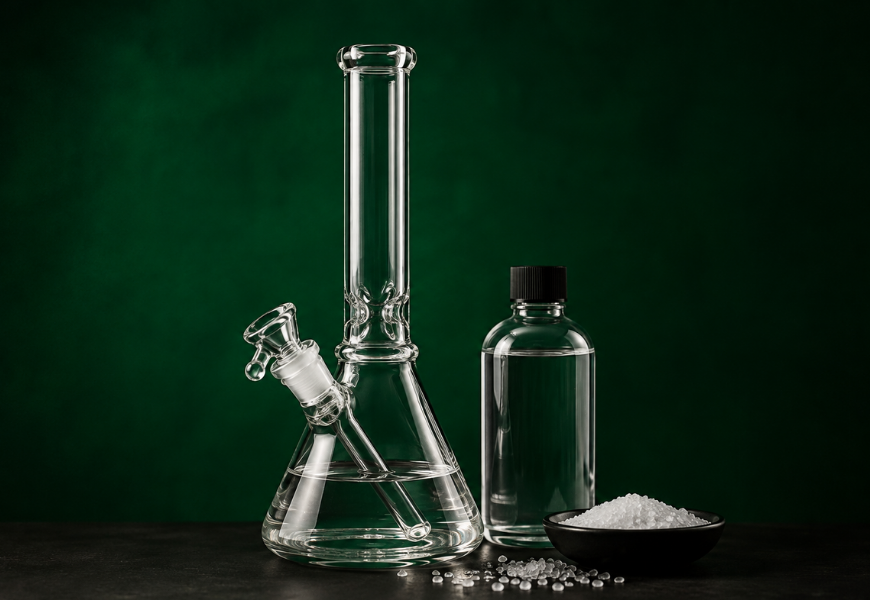
Look for a bong cleaner that's isopropyl- or enzyme-based, safe for your specific material (glass, silicone, or acrylic), and formulated to cut through resin without leaving harsh chemical residue behind. Here's how store-bought options actually compare to a DIY salt-and-alcohol mix, and which tools make either method work better.
Cleaning Method Comparison
|
Method |
Best For |
Pros |
Cons |
|
Store-bought solution |
Convenience, heavy resin |
Pre-mixed, often faster-acting |
Costs more per use |
|
DIY isopropyl + coarse salt |
Regular maintenance, budget |
Cheap, effective, always available |
Requires shaking and soak time, alcohol smell |
|
Specialty brush or tool |
Hard-to-reach spots (percolators, joints) |
Reaches areas liquid alone can't scrub |
Doesn't replace a full solution soak |
What to Look for in a Store-Bought Solution
Not every bottle labeled "bong cleaner" is worth the shelf space. A few things actually matter:
- Isopropyl or enzyme-based formula. These break down resin at the molecular level rather than just masking odor.
- Material compatibility. Some solutions are too harsh for acrylic or silicone, even though they're fine on glass. Check the label before assuming it works across every piece you own.
- Rinse requirements. A good solution should rinse clean without leaving residue that affects the taste of your next session.
- Concentration matters. Isopropyl alcohol at 91% or higher cuts through resin noticeably faster than 70%, since the extra alcohol content means less water diluting the solvent action.
If you already have a dab rig cleaning routine down, the same material logic applies to bongs. The chemistry doesn't change much between the two.
DIY Cleaning Solution Recipe

For most regular maintenance, isopropyl alcohol and coarse salt work just as well as anything store-bought:
- Empty and disassemble the bowl and downstem.
- Add isopropyl alcohol (91% or higher) to the main chamber.
- Add a generous handful of coarse salt as an abrasive.
- Cover the openings and shake for one to two minutes.
- Let it soak 15 to 30 minutes if buildup is heavy, shaking periodically.
- Rinse thoroughly with warm water until no alcohol smell remains.
The salt isn't just tradition. Its rough texture physically dislodges resin as it moves around inside the chamber, while the alcohol dissolves what the salt loosens. That combination is why this ritual has stuck around for decades instead of being replaced by newer products. For a full walkthrough of soak times and technique, our deep cleaning guide covers the process in more depth.
If you'd rather skip isopropyl entirely, dish soap, hydrogen peroxide, and baking soda are real alternatives worth knowing. Our guide to cleaning a bong without alcohol breaks down when each of those makes sense.
Tools That Help
Liquid alone, whether store-bought or DIY, can't reach everything:
- Pipe cleaners: essential for downstems and joints where a bottle of solution can't scrub directly.
- Soft-bristled brushes: good for the main chamber without risking scratches on glass.
- Cleaning caps or plugs: seal the openings so you can shake without spilling solution everywhere.
For percolator-heavy pieces especially, tools matter more than the solution itself. Our percolator cleaning guide covers which brushes actually reach those intricate chambers. Grasscity's bong cleaner collection covers both pre-mixed solutions and the brushes to pair with them, so you can buy either separately or as a kit.


