

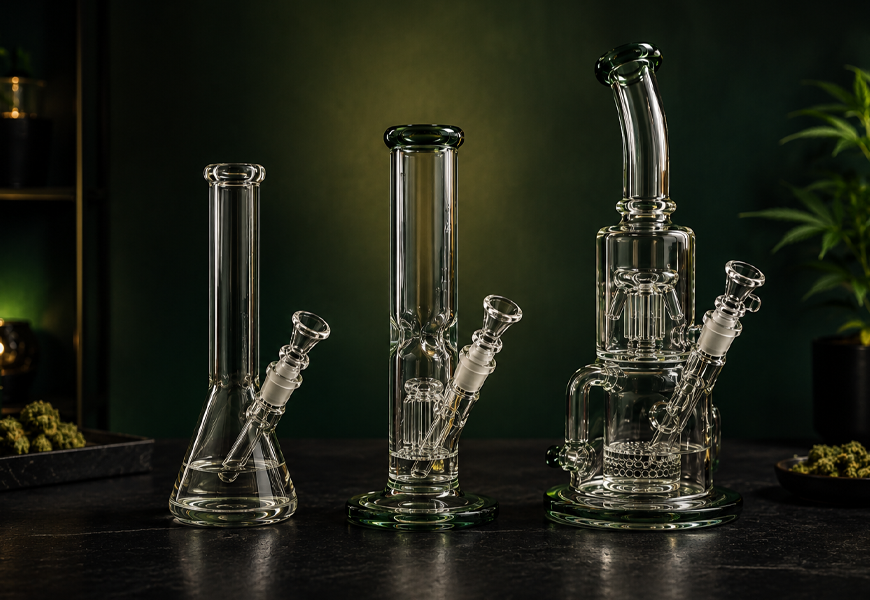
Most bongs cost $15 to $40 for basic budget pieces, $50 to $150 for solid mid-range glass with percolators, and $150 and up for premium, artist-made pieces. Here's what actually changes at each price point.
Price Depends on Glass, Features, and the Maker
Price mostly comes down to three things: glass thickness and quality, feature complexity (percolators, ice catchers, recyclers), and whether it's mass-produced or hand-blown by a named artist. A higher price generally buys more durability and smoother filtration, but for casual use, a well-made mid-range piece covers most of what you actually need. If you want the fuller picture before you shop, our bong buying guide walks through materials and shapes alongside price.
Price Tiers at a Glance
|
Price Tier |
Typical Range |
What You Get |
|
Budget |
$15–$40 |
Basic glass, acrylic, or silicone; simple design, minimal or no percolation |
|
Mid-Range |
$50–$150 |
Thicker borosilicate glass, percolators, ice catchers, solid craftsmanship |
|
Premium |
$150+ |
Hand-blown, artist-made, complex percolation, collector value |
Ranges reflect Grasscity's current catalog. Mini bongs and cheap bongs start around $15 to $20, while a solid beaker-style glass piece typically lands in the $50 to $80 range before extra percolation pushes it higher.
What Actually Drives the Price
Four factors explain almost the entire price gap between a $20 bong and a $300 one:
- Glass thickness. Thicker borosilicate walls take more raw material and more skilled handling at the torch to shape without cracking, and that labor and material cost shows up directly in price.
- Percolator count and complexity. Each additional percolator (honeycomb, tree, showerhead) means more glasswork time and more precision, since the piece has to function correctly, not just look good. Our percolator guide breaks down what each style actually adds.
- Extra features. Ice catchers, splash guards, and recyclers all add manufacturing steps beyond a simple straight tube.
- Artist reputation. A named glassblower's piece carries a premium the same way any signed craft work does: You're paying for a specific person's skill and reputation, not just materials.
Material matters too, separately from craftsmanship. Acrylic bongs are the cheapest to produce and stay budget-priced regardless of design. Silicone bongs sit in a similar budget-to-mid range even with added features, since the material itself is inexpensive to mold. Glass is the material where price climbs fastest, because thickness and hand-blown detail both add real cost.
Is an Expensive Bong Worth It?

It depends on what you actually use it for. It's not a universal yes.
Where the extra cost genuinely pays off:
- Daily or heavy use: Thicker glass holds up better to repeated cleaning and handling over years.
- Smoothness matters a lot to you: More percolation genuinely does cool and filter smoke further, and you'll notice the difference hit to hit.
- You want a collector or gift piece: Artist-made glass holds and sometimes gains resale value in a way mass-produced pieces don't.
Where it doesn't matter as much:
- Casual or occasional use: A mid-range piece delivers most of the practical smoking experience without the premium price tag.
- Travel or backup pieces: Durability and low stakes matter more than craftsmanship here, which is exactly where budget acrylic and silicone shine.
- First-time buyers: You won't know your own preferences (perc style, size, material) until you've used a bong for a while, so overspending on your first piece is a common regret. Browse the full bongs collection to compare options across every tier before you decide.
Being honest about this is worth more than upselling: Expensive doesn't automatically mean better for your specific situation, and a $30 piece used and cleaned well will outperform a $300 piece that gets neglected.


