

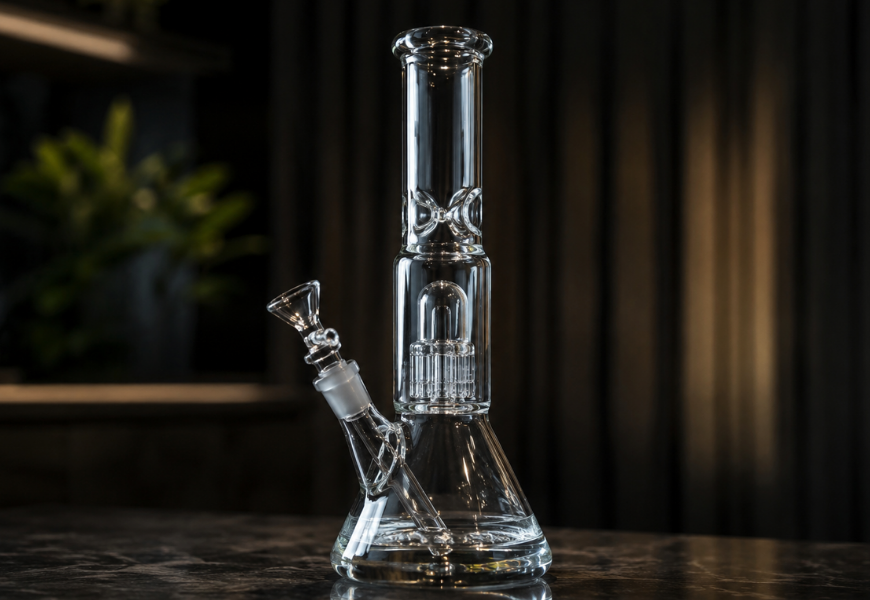
A bong has six main parts: the bowl (holds your flower), downstem (carries smoke into the water), water chamber (where filtration happens), neck (where smoke travels up), mouthpiece (where you inhale), and often a percolator for extra filtration. Here's what each one actually does.
Quick Reference: Parts of a Bong
|
Part |
What It Does |
Built-In or Optional |
|
Bowl |
Holds the flower, sits removably atop the downstem |
Built-in |
|
Downstem |
Connects the bowl to the water, carrying smoke down into the chamber |
Built-in |
|
Water chamber / base |
Where smoke is cool and filtered, traps ash and larger particles |
Built-in |
|
Neck / tube |
Glass tube that carries smoke upward as it continues to cool |
Built-in |
|
Percolator |
Optional extra chamber that breaks smoke into bubbles for smoother hits |
Optional |
|
Ash catcher |
Optional attachment that traps ash before it reaches the water chamber |
Optional (add-on) |
|
Mouthpiece |
Where you inhale from |
Built-in |
|
Carb hole |
Small hole on some designs that controls airflow when cleared |
Optional (design-dependent) |
The Bowl
The bowl is the small, usually removable piece where you pack your flower. It sits on top of the downstem and is the only part of a glass bong that regularly touches direct flame, which is why it's typically made from thicker, heat-treated borosilicate glass.
Bowls also come in different joint sizes, so if you're replacing one, matching the size to your bong's downstem matters more than style or design:
- 14mm: the most common size on standard and beaker bongs
- 18mm: common on larger pieces and some percolated designs
The Downstem
The downstem is the tube that connects the bowl to the water. Once you light the bowl and inhale, smoke travels down through the downstem and releases underwater through small slits or holes at the bottom, which is where filtration actually begins.
A longer downstem submerges deeper into the water chamber, giving smoke more contact time with the water before it rises. That's a small design detail, but it's part of why two bongs with similar water chambers can still deliver noticeably different hits.
The Water Chamber / Base
This is where the real work happens. As smoke passes through the water chamber, it gets cooled and filtered, and that filtered smoke is what makes a bong noticeably smoother than smoking dry. On glass bongs especially, you can watch this happen in real time as bubbles rise through the base.
The water chamber does two jobs at once:
- Cools and filters smoke as it bubbles up through the water
- Traps ash and debris that would otherwise travel straight up into the neck
More water generally means more filtration, but also a bigger cleaning job, which is the tradeoff every water chamber design is built around.
The Neck and Mouthpiece
Neck: Once smoke clears the water chamber, it travels up through the neck, a glass tube that gives it room to cool further before reaching you. A taller neck means smoke has more distance and time to cool, which is part of why larger bongs tend to deliver a noticeably cooler smoking experience than smaller ones.
Mouthpiece: This sits at the very top, where you actually inhale. It's usually flared or rounded for a comfortable seal against your mouth, and on most pieces it's the widest point of the neck.
The Percolator (If Your Bong Has One)
The percolator is the most commonly misunderstood part, so it's worth being precise here. A percolator is an internal filtration chamber, separate from the main water chamber, that breaks smoke into smaller bubbles as it passes through water. More bubbles means more surface area contact with water, which cools and filters smoke more thoroughly before it reaches the neck.
Not every bong has one. Simpler designs rely entirely on the base for filtration, which is perfectly functional, just less smoothing than a percolated design. Common percolator styles include:
- Honeycomb: a flat disc with many small holes for wide, even diffusion
- Tree: several branching arms, each pushing smoke through water separately
- Showerhead: a single tube with slits around the base, spreading smoke outward
Each style breaks up smoke differently, but all work toward the same goal of smoother hits.
The Ash Catcher (Add-On, Not Built-In)

An ash catcher isn't a built-in part like the ones above, it's a separate attachment that sits between the bowl and the downstem. Its job is simple: catch ash and debris before it ever reaches the main water chamber, so the water filtered smoke stays cleaner for longer and the base itself needs cleaning less often.
Ash catchers often include their own small percolator too, giving smoke an extra round of filtration on top of whatever the water pipe itself already provides. They're an optional upgrade rather than a core part, but a popular one for anyone who wants to keep their main chamber cleaner between sessions.
The Carb Hole (On Some Designs)
A carb hole is a small hole, usually on the side of the water chamber, found on some bong and pipe designs. Covering it while lighting and inhaling, then releasing it, clears smoke from the chamber quickly. Not all bongs have one, many modern designs use a removable bowl instead, which serves a similar clearing function without a dedicated hole.


