

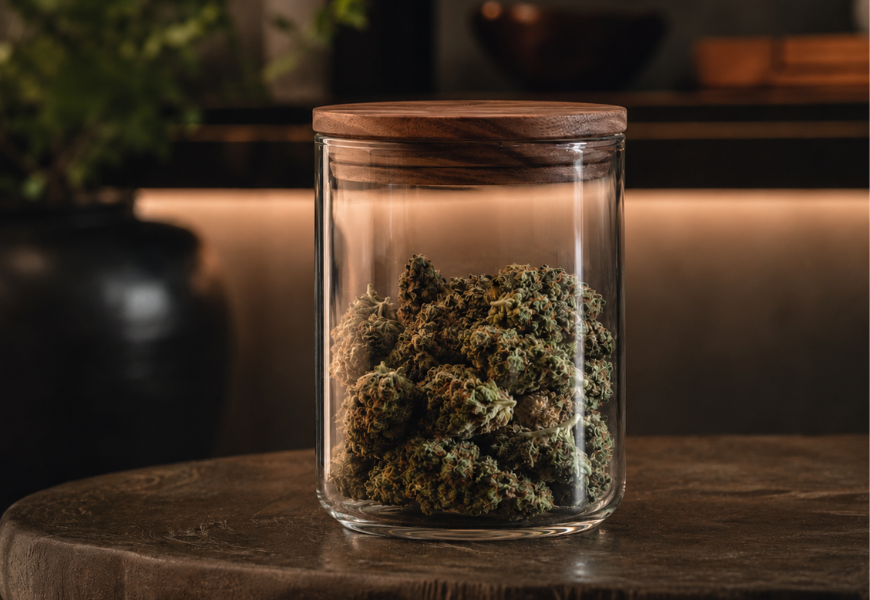
Properly stored dry herb stays potent and flavorful for 6 months to a year. It doesn't "expire" like food, it gradually loses potency and terpene flavor over time. Here's what affects that timeline and how to make yours last longer.
What Actually Happens as Dry Herb Ages
Dry herb doesn't spoil the way food does, it degrades. Two things drive that process:
- Terpenes evaporate. These are the compounds responsible for smell and flavor, and they're the first thing to fade, especially with light and air exposure.
- THC and other active compounds slowly break down. E
-
xposure to light, heat, and air gradually reduces potency over time, even if the dry herb still looks and smells fine at first glance.
Dry Herb, Wax & Desktop Vaporizers
A stability study published through the National Center for Biotechnology Information found that ground dry herb kept sealed in cold storage showed no significant cannabinoid loss after three months, while the same material stored at room temperature for two years experienced about a 21% reduction in total THC. That gap is the whole case for storing it cold, dark, and sealed instead of leaving it out.
Store it in a smell proof stash gear, away from direct light and heat, and both of these happen much more slowly. That's the entire logic behind proper storage: slow down evaporation and degradation, not stop them completely, since some loss over time is unavoidable.
Signs Your Dry Herb Has Degraded

A few sensory cues tell you when dry herb has aged past its best window:
- Dried out, crumbly texture instead of a slight give when handled
- Faded or muted smell, where the aroma that used to be noticeable now barely registers
- Harsher smoke than you remember, often paired with a flatter, less flavorful taste
- Visible mold (fuzzy, discolored spots), which is the one sign that means toss it, not just "less potent"
Outside of visible mold, aged dry herb generally isn't unsafe, it's just less potent and less enjoyable. A dried-out jar from the back of a drawer is disappointing, not dangerous.
How Long Other Dry Herb Products Last
Flower isn't the only thing with a shelf life. Here's how other common formats compare:
|
Product |
Typical Shelf Life |
Notes |
|
Dry herb (unopened, stored well) |
6 months–1 year |
Gradually loses potency and flavor, doesn't spoil |
|
Gummies (edibles) |
6–12 months unopened |
Similar to regular gummy candy, check the package date |
|
Oil / tinctures |
1–2 years |
Store in a cool, dark place to slow degradation |
|
About 1 year |
Store upright, away from heat and direct sunlight |
|
|
Decarboxylated (activated) flower |
A few months |
Degrades faster than raw flower once activated |
How to Make It Last Longer
The short version: an airtight glass jar, kept in a cool, dark place, with humidity controlled in the 55–62% range, is the sweet spot for slowing down both terpene loss and potency decline. If you want the full storage methodology, from container choice to humidity packs, our dedicated long-term storage guide covers it in detail.
Bottom Line
Dry herb doesn't have an expiration date so much as a fading window, potency and flavor decline gradually rather than dropping off a cliff. Store it properly and you're looking at 6 months to a year of good quality; skip proper storage and that window shrinks fast. Outside of visible mold, older dry herb is a letdown, not a hazard, so if in doubt, check texture, smell, and appearance before deciding whether it's still worth using.


