

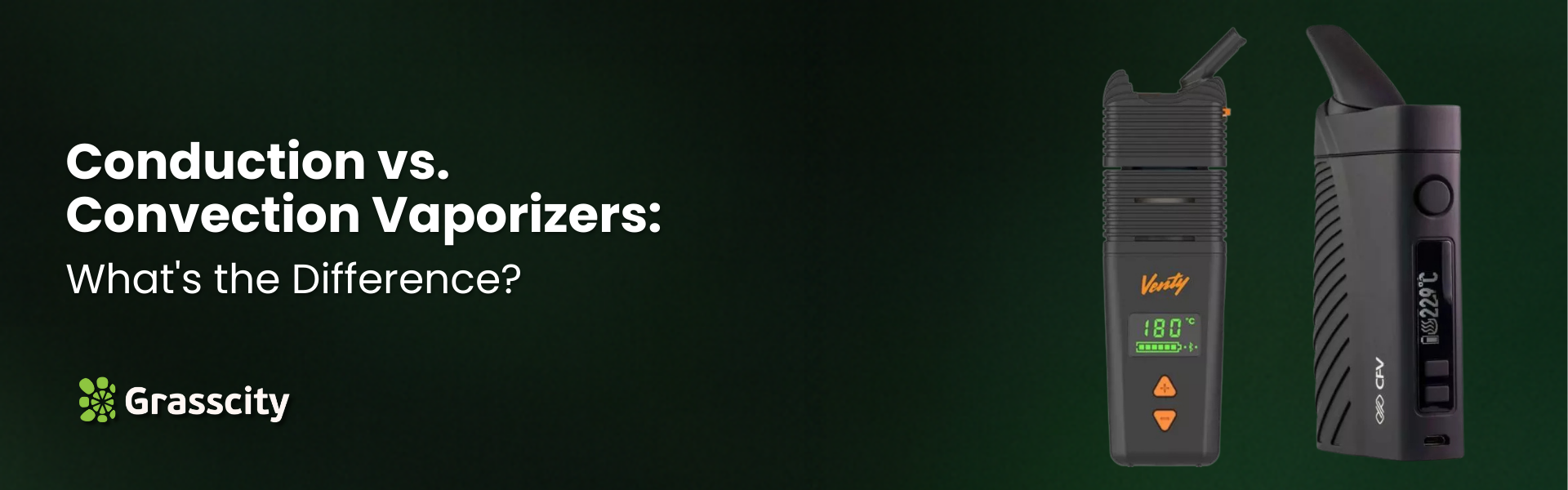
The main difference is that conduction vapes heat your herb with direct contact (like a hot pan), while convection vapes heat it with a stream of hot air (like an oven).
Choosing your first (or next) vaporizer is a big step. You see terms like 'conduction' and 'convection' thrown around, but it's hard to know what's real and what's just marketing. At Grasscity, we've seen it all in the last 25 years. We're here to cut through the noise and help you understand the tech so you can find the perfect piece for your sesh.
What is Conduction Heating? (The "Hot Plate" Principle)

Conduction heating is the "hot plate" principle in action. Think of it like a tiny, hot pan frying your herb. The heating element—usually the metal or ceramic walls of the oven—is in direct physical contact with your material, toasting it.
It's a popular design because it has some clear advantages:
-
It's fast. Many conduction vapes are ready for a hit in less than 30 seconds.
-
It's portable. The simple design allows for smaller, more pocket-friendly devices.
-
It's efficient (with battery). This method is easier on the battery, meaning you get more sessions from a single charge.
But, like a hot pan, it has downsides:
-
It can scorch. The herb touching the hot walls cooks faster than the herb in the middle, creating uneven heating and a risk of scorching.
-
The flavor fades. The first few draws taste great, but the flavor can quickly degrade into a burnt or toasted popcorn taste as the material overcooks.
This setup is the engine for the classic "session" vape. It’s the perfect choice for the on-the-go user who values speed, simplicity, and portability for a full session.
What is Convection Heating? (The "Hot Air" Principle)
Convection heating flips the script. Instead of toasting your herb on a hot surface, this method works like a tiny convection oven or an air fryer. The heating element is separate; it never actually touches your bud. It just heats the air to a precise temperature. When you take a draw, you pull that stream of hot air through the material, baking it perfectly and evenly.
This "hot air" method has some major upsides, and it's all about quality:
-
Pure Flavor: This is the number one reason people choose convection. By evenly baking the herb instead of scorching it, it preserves all the delicate terpenes. This gives you a much cleaner, purer taste from the first hit to the last.
-
High Efficiency: That even "bake" means no material gets wasted. You're not left with a burnt crust and an un-vaped center. Every bit is used.
-
No Combustion: Since the herb never touches the hot element, you virtually eliminate the risk of scorching or burning. It's all vapor, no smoke.
So, what's the catch?
-
Slower Heat-Up: These devices usually take longer to get to temperature (though high-end exceptions like the FireFly are crazy fast).
-
Size and Cost: All that extra tech for the air path means convection vapes are often larger and more expensive.
-
The "Learning Curve": You can't just "sip" on it like a conduction vape. It requires a specific technique—usually a long, slow, steady draw—to pull the hot air through the chamber properly.
What About Hybrid Heating? (The Best of Both Worlds?)
So, what happens when you smash both ideas together? You get hybrid heating.
It's a smart-heating combination designed to be the best of both worlds. These vapes run both methods at the same time: the oven walls heat up (conduction) to get your material toasting, while the device also pulls hot air through the herb (convection).
The whole goal is to fix the trade-offs. You get the fast heat-up and thick, dense vapor that conduction is known for, plus the pure flavor and high efficiency you get from convection. It's the powerhouse technology behind some of the most legendary vapes on the market, like the Storz & Bickel Mighty+.
Which is Better: Conduction or Convection?
This is the big question, right? Here’s the real answer: there is no single 'best' method. The 'best' vaporizer is the one that actually fits your lifestyle and your habit. It all comes down to what kind of user you are.
You Should Choose Conduction If...
...you are a "session" vaper who values speed, portability, and simplicity for on-the-go use. You're the "Stylish Commuter"—you want to pack a bowl, turn it on, and have your full session without any fuss. This is the specialty of sleek, fast devices like the PAX and DaVinci lines.
You Should Choose Convection If...
...you are the "Flavor Purist." You vape mostly at home, want the purest possible taste, and prioritize efficiency over a fast heat-up. You don't mind taking your time to get the perfect, clean hit that highlights all the terpenes. This is the world of on-demand portables like the FireFly 2+ or powerful desktop units like the Arizer XQ2.
You Should Choose Hybrid If...
...you're the "Prosumer" who wants the best of all worlds. You're ready to invest in a top-tier device because you want power, pure flavor, and big clouds. You don't want to compromise. This is the territory of the undisputed kings, like the Storz & Bickel Venty or the legendary Mighty+.
Frequently Asked Questions (FAQ
Got a few more questions? Don't sweat it. We've been answering these for 25 years. Here's the rundown.
Is convection or conduction vape better?
There's no single "best" one. It's all about your habit. If you want speed and portability for a quick session, conduction is your best bet. If you're all about pure flavor and want the most efficiency from your herb, convection is the way to go.
Which works more quickly, conduction or convection?
Conduction wins this race, easily. Because the heater is in direct contact with the herb, most conduction vapes are ready to go in less than 30 seconds. Convection vapes (the "ovens") need more time to heat up all the air.
Is the Mighty+ vaporizer conduction or convection?
Ah, the Mighty+. It's the king for a reason. It’s actually a hybrid vape, which means it uses both conduction and convection at the same time. That's how it gives you massive clouds (from the conduction) and amazing flavor (from the convection).
What are the disadvantages of a convection heater?
The main disadvantages are size, cost, and time. Because the tech is more complex, convection vapes are usually bigger and more expensive. They also tend to have a slower heat-up time and often a "learning curve"—you have to learn a specific long, slow draw to get the best results.
How do I remember the difference between conduction and convection?
Here's the 25-year expert cheat code:
-
Conduction = Contact. (Like a hot pan).
-
Convection = Convection Oven. (Like hot air).


